Bloodlines, Spirit, and the Nature of Familiar Connections
I’ve been thinking more deeply about the idea of familiars, spirit guides, and bloodlines, and I don’t fully align with the modern idea that a familiar is simply an animal companion. That interpretation feels a bit surface-level to me. I lean more toward the concept of a deeper spiritual connection—something less physical and more energetic, something tied to awareness, identity, and connection rather than form.
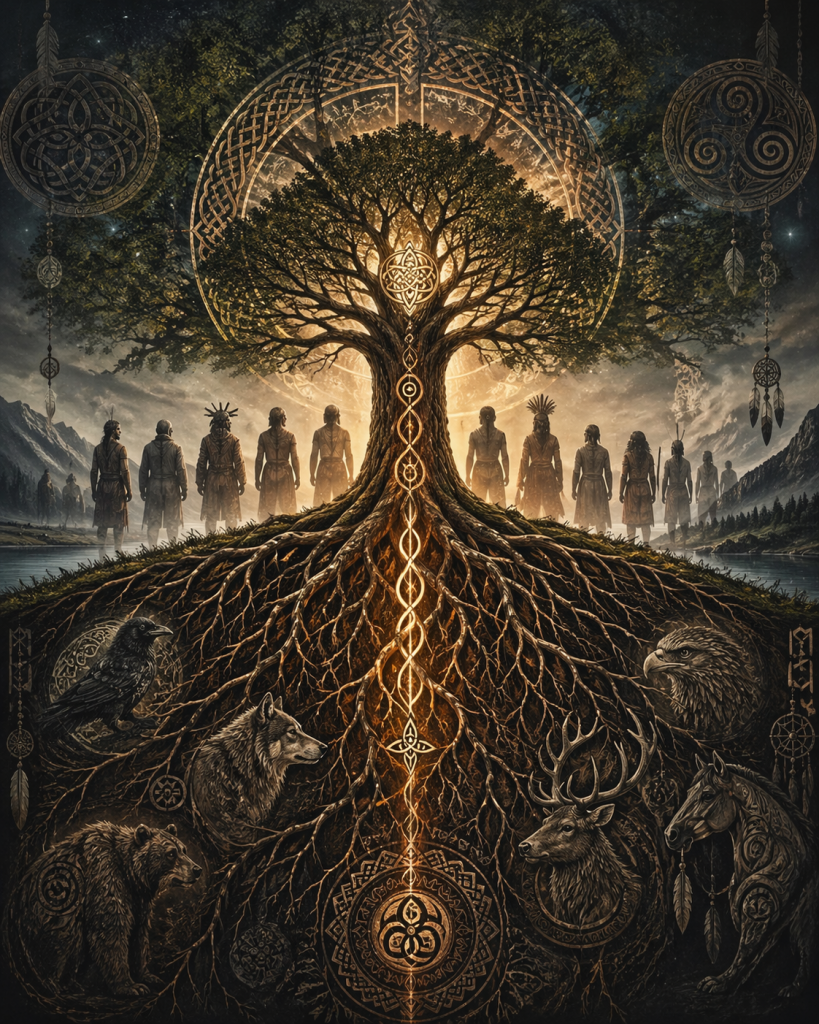
Across many belief systems—not just Judeo and Christian traditions like Judaism and Christianity, but also African traditional religions, Norse traditions, and various esoteric systems—there’s a recurring emphasis on the importance of blood, lineage, and ancestry. Blood is often treated not just as a biological substance, but as a carrier of life, identity, and even spiritual continuity. That pattern shows up too consistently across cultures to ignore, and it makes me think bloodlines may carry more than just physical traits—they could also carry a kind of spiritual imprint, a pattern, or an energetic signature that persists over time.
At the same time, I do believe in spirit animals—but I don’t see them as the same thing as familiars. To me, a spirit animal is more of a symbolic or energetic connection. It reflects traits, tendencies, or guidance that resonate with a person. An actual animal in someone’s life may seem to step into that role at times, and I do think animals can “fill the shoes” of what people call a familiar, but I don’t believe animals themselves are often literal familiars in the deeper sense.
I also believe in what I’d call a “soul animal”—an animal you form a deep, undeniable bond with. That kind of connection is very real and has been demonstrated throughout human history across cultures and time periods. But I see that as relational rather than mystical in the same way a familiar would be. It’s a shared bond, a mutual recognition, not necessarily something tied to lineage or inherited energy.
My working idea is that each of us carries a spirit—an energy that is both individual and interconnected with everything else. Within that, some people seem naturally more capable of shaping or manifesting their reality. That doesn’t feel entirely random to me. It may be influenced, at least in part, by what’s carried through their bloodline—whether that’s mindset, awareness, emotional patterning, or something more subtle that we don’t fully understand yet.
If that’s the case, then bloodlines may function less like a source of “power” in the dramatic sense, and more like a channel of continuity—passing down patterns, tendencies, and ways of interacting with reality. Some of those patterns are beneficial and reinforcing, while others can be limiting or even destructive. Over time, they can appear almost as if something is being “inherited” on a deeper level.
In that framework, what people call “familiars” or “guides” might not be separate, independent beings at all. They could instead be expressions of that deeper connection—something shaped by both the individual and the lineage they come from. The form they take, whether symbolic, intuitive, or even occasionally externalized, may simply be the mind and spirit interpreting that connection in a way it can understand.
That also leaves room for the idea that not all of these influences are positive. Just as supportive patterns can be passed down, so can harmful ones. What some traditions describe as negative attachments or influences could, in part, be the continuation of unresolved patterns moving through a lineage.
I’m not claiming this as a definitive explanation, but it’s the framework that currently makes the most sense to me. It allows room for spiritual experience without requiring everything to be externalized, and it connects ancestry, personal awareness, and lived experience into a single, continuous thread.
.
.