
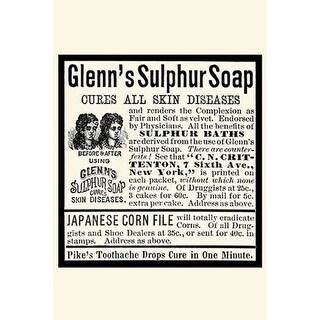
Sulfur, DMSO, and the Forgotten History of an Ancient Remedy
Long before modern pharmaceuticals, people sought relief from the natural world around them. Among the most respected remedies in human history was sulfur.
For thousands of years, sulfur occupied a unique place in medicine. Ancient Egyptians used sulfur in medicinal preparations. The Greeks and Romans sent sufferers to sulfur-rich hot springs, where many reported relief from joint pain, skin conditions, and other chronic ailments. Across Europe, Asia, and the Middle East, sulfur baths became part of established healing traditions that persisted for centuries.

Of course, ancient physicians did not understand chemistry the way we do today. They had no knowledge of molecules, enzymes, or inflammation pathways. What they had was observation. People soaked in sulfur-rich waters, applied sulfur-based preparations, and often felt better afterward.
As medicine advanced, sulfur never completely disappeared. Sulfur-containing compounds continued to appear in ointments, soaps, and various medical treatments. Then, in the mid-20th century, researchers discovered something particularly intriguing: a compound known as dimethyl sulfoxide, or DMSO.
Derived from lignin during the wood-pulping process, DMSO displayed unusual properties. It could penetrate biological tissues more effectively than many other substances and appeared to possess anti-inflammatory and pain-relieving effects. During the 1960s, researchers investigated DMSO for a wide range of potential medical applications.
The excitement was significant. Physicians experimented with it. Researchers published studies. Patients reported benefits for conditions involving pain and inflammation. For a brief period, DMSO seemed poised to become a major new therapeutic tool.

Then controversy emerged.
In 1965, concerns arising from animal studies led the FDA to halt many ongoing clinical investigations while safety questions were examined. Although later research would clarify some of those concerns, the momentum behind DMSO was never fully restored in the United States.
That does not mean DMSO disappeared.
Today, DMSO remains FDA-approved for the treatment of interstitial cystitis, a painful bladder condition. It is also used in medical research, cell preservation, and other specialized applications. Scientists continue to study its properties, and interest in the compound has never completely faded.
Closely related to DMSO is another sulfur-containing compound known as methylsulfonylmethane, or MSM.
Unlike DMSO, MSM is widely available as a dietary supplement and is commonly used by people seeking support for joint comfort and mobility. Research on MSM has produced mixed but generally encouraging results. Several studies suggest it may help reduce discomfort and improve function in some individuals with osteoarthritis, though it should not be viewed as a cure or replacement for medical care.
The story of sulfur, DMSO, and MSM is a reminder that some of humanity’s oldest remedies still hold scientific interest today. While modern marketing often turns these compounds into miracle cures—or dismisses them entirely—the reality lies somewhere in between.

Sulfur is neither magic nor myth.
It is a naturally occurring element with a remarkable history, a place in modern medicine, and a continuing role in scientific research. From the sulfur springs of ancient Rome to modern laboratories studying inflammation and joint health, the story of sulfur is one that continues to evolve.
Sometimes the most fascinating discoveries are not new at all. They are ancient ideas that science is still trying to understand.