UNIT 731: JAPAN’S SECRET BIOLOGICAL WARFARE PROGRAM IN CHINA
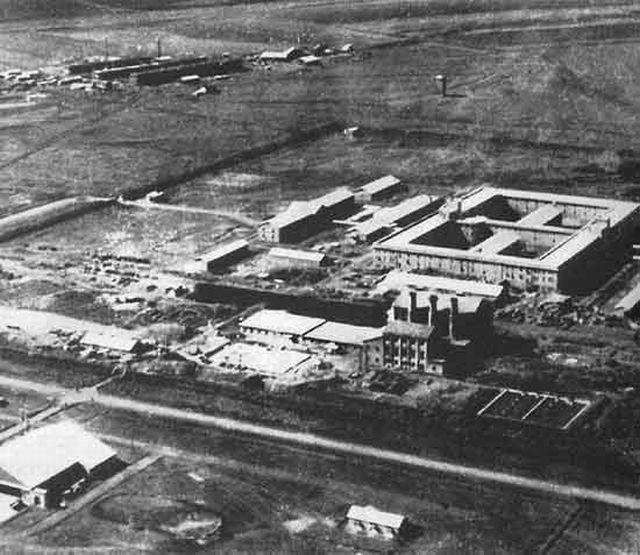
Unit 731 was operated by the Imperial Japanese Army’s Kwantung Army under physician and army officer Shiro Ishii. Its principal complex was at Pingfang, outside Harbin, in Japanese-controlled Manchuria. Officially it was disguised as an “Epidemic Prevention and Water Purification Department.” In reality, it became the hub of a much larger network devoted to biological warfare.
The Pingfang installation alone contained roughly 150 buildings and employed thousands of personnel. The broader Japanese biological warfare system included satellite units elsewhere in China and the Japanese empire. Its facilities included laboratories, animal-breeding areas, prisons for human experimental subjects, weapon-production facilities, testing areas and a crematorium for disposing of victims. (PubMed Central (PMC))
The prisoners were human laboratory animals
The victims included overwhelmingly Chinese prisoners and civilians, along with Koreans, Mongolians, Soviets and others. Historians have also investigated allegations involving Allied POWs, although some specific claims concerning American prisoners remain more contested than the enormous body of evidence concerning Chinese victims.
Prisoners were deliberately infected with diseases including plague, anthrax, cholera, typhoid, dysentery, glanders and other pathogens. Researchers studied the course of infection until death and conducted autopsies and vivisections to observe the effects on organs. Other experiments examined extreme cold, wounds and other battlefield injuries. Modern scholarship classifies the program as large-scale involuntary human experimentation and a major war crime. (PubMed)
One difficulty is establishing an exact death toll. Thousands certainly died inside Japanese biological-warfare facilities. Estimates become much larger when deaths caused by biological attacks and the epidemics that followed them are included. Some older literature gives very high figures that cannot be reconstructed with precision, so it is safer to say that the laboratory deaths numbered in the thousands and that field deployment killed many thousands more.
The plague fleas
This is the part you were specifically remembering.
Unit 731 learned to weaponize bubonic plague by breeding fleas and allowing them to feed on plague-infected animals, particularly rats. The fleas became carriers of Yersinia pestis, the bacterium responsible for plague.
The Japanese then developed methods for releasing the infected fleas over populated areas.
Aircraft dropped plague-bearing fleas onto Chinese communities. Various delivery methods were tested, including special ceramic bombs designed to release biological material without destroying it with the heat and force associated with conventional explosives. Japanese forces also scattered contaminated food or grain that attracted rats and brought people into proximity with infected fleas. (PubMed Central (PMC))
The principle was terrifyingly simple:
infected flea → human or rat → plague infection → additional fleas feed on infected hosts → epidemic spreads beyond the original attack.
In other words, unlike an ordinary bomb, the weapon potentially continued reproducing after it landed.
Ningbo, 1940
One of the best documented attacks occurred at Ningbo in Zhejiang Province on October 27, 1940.
A Japanese aircraft dropped material containing plague-infected fleas over the city. Soon afterward an outbreak of bubonic plague appeared. Historical epidemiological reconstruction has found a strong relationship between the attack and the resulting outbreak.
One modern review reports 112 deaths in the documented Ningbo outbreak, with a very high case-fatality rate. (PubMed Central (PMC))
The number itself is worth emphasizing because this illustrates one of the problems with discussing Unit 731: some popular accounts claim enormous numbers for particular attacks, whereas surviving medical and historical records sometimes document considerably smaller but still horrifying outbreaks. The existence of the attack is far better established than many of the precise casualty estimates.
Changde, 1941
Changde in Hunan Province was another major target.
Witnesses described Japanese aircraft dropping grain, wheat, paper fragments and other material. A plague outbreak followed. U.S. Army investigators examined the incident in 1945 and concluded that Japanese biological-warfare activity in China was a serious possibility; later evidence obtained from the Japanese program strengthened the case substantially. (National Archives)
Later historical and medical literature treats Changde as one of Japan’s biological-warfare attacks, although estimates of casualties vary considerably. (PubMed Central (PMC))
One particularly grim feature of biological warfare emerged here and elsewhere: disease could not always be controlled. Japanese soldiers themselves were sometimes infected during these operations.
It was not only plague
Japan experimented with and weaponized a wide range of organisms and toxins.
Among the agents associated with the program were plague, anthrax, cholera, dysentery, typhoid, glanders and meningococcal disease. Japanese forces also deliberately contaminated wells and food supplies. One historical review reports that more than 1,000 wells in Chinese villages were deliberately contaminated during experiments involving diseases such as cholera and typhus. (PubMed Central (PMC))
There were at least a dozen significant biological field trials or attacks described in the historical literature, and one medical review identifies attacks involving at least eleven Chinese cities. (PubMed Central (PMC))
So Unit 731 should not really be understood as a single mad laboratory. It was part of an offensive biological-warfare infrastructure.
The connection to the Doolittle Raid
There is another especially dark episode.
After American aircraft carried out the Doolittle Raid against Japan in April 1942, many of the American crews landed or crashed in China. Chinese civilians helped surviving American airmen escape Japanese capture.
Japan retaliated brutally against areas believed to have assisted them.
Historical research indicates that Japanese forces subsequently employed biological agents including anthrax and glanders during campaigns in parts of Zhejiang and Jiangxi. These attacks occurred within a much larger Japanese campaign of reprisals against Chinese communities connected with the rescue of American airmen. (PubMed Central (PMC))
That places Unit 731 and related biological warfare directly within the larger history of the Pacific War involving the United States.
August 1945: destroy everything
As Soviet forces invaded Manchuria and Japan moved toward surrender in August 1945, the leadership of the biological-warfare program understood exactly what captured facilities and prisoners could reveal.
The order was essentially to erase the evidence.
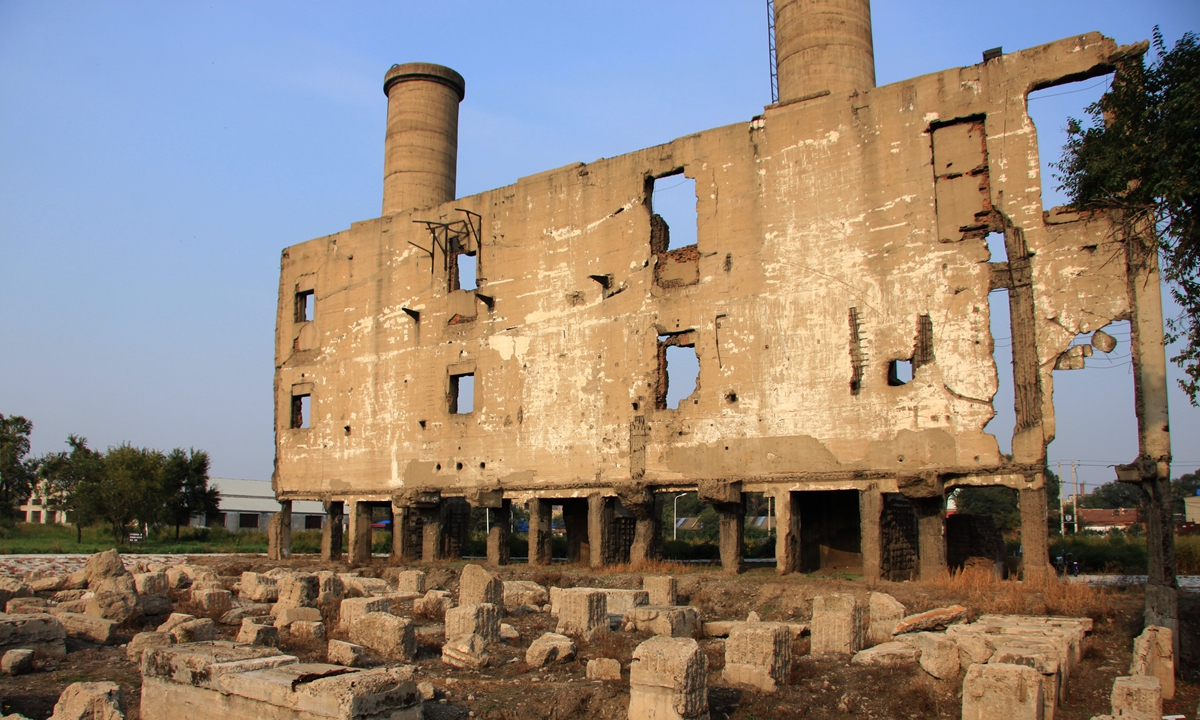
Personnel destroyed records, equipment and facilities. The enormous Pingfang complex was demolished with explosives. Evidence of biological experimentation was burned or otherwise destroyed. Remaining experimental prisoners were killed so that they could not testify.
U.S. National Archives research states directly that, with surrender approaching, Ishii’s men disposed of much of the evidence and destroyed the Pingfang facility in early August 1945. (National Archives)
Shiro Ishii then disappeared.
He reportedly arranged a false story announcing his death and even staged a funeral. American intelligence eventually located him in January 1946. (National Archives)
There was also a horrifying unintended consequence of destroying the complex. Research on the postwar Harbin plague epidemic argues that infected animals or fleas released during the destruction contributed to a plague reservoir in the area, with outbreaks continuing after the war. (PubMed)
Then came the second scandal: the United States
What happened after the war is almost as extraordinary as the program itself.
American military intelligence realized that Unit 731 possessed information obtained through human experiments that the United States could not ethically reproduce.
American biological-warfare specialists from Fort Detrick interviewed Ishii and numerous Japanese researchers.
A 1947 investigation by Edwin Hill and Joseph Victor concluded that the Japanese possessed unique information concerning human susceptibility to biological agents. Their report explicitly observed that comparable information could not have been obtained in American laboratories because of the ethical prohibitions surrounding human experimentation. (National Archives)
American officials subsequently debated whether prosecuting the scientists was more valuable than obtaining their data.
Declassified U.S. records are remarkably explicit. A National Archives document summary records that American officials concluded that the value of the biological-warfare information outweighed prosecution and advocated immunity. The State Department warned that doing so could become a serious embarrassment to the United States. (National Archives)
In practice, Ishii and most of the major Unit 731 figures were never prosecuted by the United States.
That is one major reason Unit 731 never became as universally familiar in the West as Nazi medical experimentation.
The Soviets did prosecute some of them
The Soviet Union captured members of Japan’s biological-warfare organizations in Manchuria.
In December 1949, twelve Japanese defendants were tried at Khabarovsk in the Soviet Union on charges related to biological warfare and human experimentation.
For many years in the West, the Khabarovsk proceedings were dismissed as Soviet propaganda. That assessment became much harder to maintain after American and Japanese records were opened because significant portions of the Soviet testimony corresponded with evidence independently uncovered elsewhere. U.S. archival material itself records the Khabarovsk prosecutions and American intelligence concerning them. (National Archives)
The proceedings are still a source that historians treat carefully because they were conducted under Stalin’s government, but the underlying existence of Unit 731’s human experimentation and biological weapons program is no longer seriously disputed.
Why so little was known for so long
There were several layers of concealment.
Japan destroyed enormous quantities of evidence in 1945.
Participants frequently remained silent.
The United States classified much of what it learned because biological warfare had become strategically important during the emerging Cold War.
The immunity arrangement discouraged public prosecution.
China was entering a civil war and then decades of geopolitical isolation from the United States.
And the crimes were consequently never exposed in a single spectacular international trial comparable to the Nazi doctors’ trial at Nuremberg.
Only gradually did survivor accounts, Japanese veterans’ testimony, Chinese investigations, Soviet records and declassified American documents converge.
The U.S. National Archives eventually conducted an enormous declassification project involving Japanese war crimes. Its collection now includes thousands of pages concerning Japanese biological warfare, Unit 731, Shiro Ishii and the American investigation after the war. (National Archives)
What historians can say with confidence today
There is overwhelming evidence that Imperial Japan operated a large offensive biological-warfare program in occupied China.
Unit 731 conducted lethal experiments on involuntary human subjects.
Japanese researchers deliberately infected people with serious diseases.
The Japanese military mass-produced biological agents.
Plague-infected fleas were deliberately released over Chinese civilian populations.
Japanese forces contaminated food and water and conducted other biological attacks.
Thousands of prisoners died within the experimentation system, while additional thousands of civilians died in biological attacks and resulting outbreaks.
Japan attempted to destroy the program and kill remaining witnesses as defeat approached in 1945.
And American authorities subsequently protected important members of the program from prosecution because U.S. military officials wanted their biological-warfare research.
Those points are not conspiracy theory or merely Chinese wartime accusations. They are supported by Japanese testimony, Soviet trial records, epidemiological investigations, scholarly research and, importantly, the United States government’s own declassified files. (National Archives)
The part of this history that requires caution is the numbers. You will see claims that Unit 731 alone killed 200,000, 300,000 or even more people. Those figures generally combine laboratory victims, numerous biological attacks, secondary epidemics and sometimes broader Japanese biological-warfare operations. There is no surviving accounting system capable of producing an exact total. “Thousands killed directly in experimentation and many thousands more through biological warfare” is extremely well supported; very large precise totals should be presented as estimates rather than established body counts.
There is enough surviving material to go considerably deeper than this. The next layer would be a chronological reconstruction from roughly 1932–1945 showing Ishii’s rise, the construction of Pingfang, how the flea-production system operated, Ningbo, Changde, the Zhejiang-Jiangxi campaign, Unit 100 and the other Japanese biological-warfare units, the final destruction of Pingfang, and then the 1945–48 American negotiations over immunity. That version could read almost like a short historical chapter rather than an encyclopedia entry.