
Neurologic: Timothy Leary’s Map of the Human Mind
Most people remember Timothy Leary for LSD.
“Turn on, tune in, drop out.”
That phrase became so closely associated with him that it tends to overshadow something I find considerably more interesting: Leary spent years attempting to construct a model explaining how human consciousness develops, becomes conditioned, gets trapped in patterns, and might eventually learn to recognize and alter its own programming.
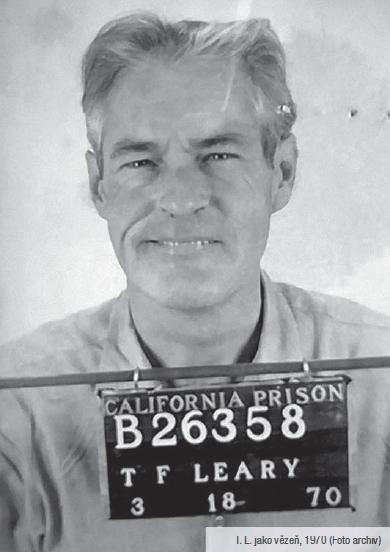
One of the strangest chapters in that work was written from a prison cell.
Writing Neurologic From Prison
In 1973, Timothy Leary was imprisoned at the California Men’s Colony in San Luis Obispo. During a period in solitary confinement, he began writing what became Neurologic.
This wasn’t exactly an ideal academic research environment.
Biographical accounts describe Leary working without research materials, writing with a small pencil stub on the back of a legal brief. The manuscript was smuggled out to Joanna Harcourt-Smith, then known as Joanna Leary, who helped circulate and publish it.
What emerged was a highly compressed attempt to describe the human nervous system as a collection of circuits.
It is important to distinguish the original theory from what it eventually became.
Neurologic described seven circuits. Leary continued developing the idea, and by 1977 it had evolved into the better-known Eight-Circuit Model of Consciousness, developed more fully in his book Exo-Psychology.
That evolution of the theory may actually be more interesting than the original book.
The Mind as a Biological Computer
At the center of Leary’s model was an unusual proposition:
What if much of what we consider our personality isn’t simply “who we are,” but programming?
Leary described the nervous system using the language of circuits, programming and imprinting.
Humans enter the world with biological capabilities, but experience determines how many of those capabilities are expressed and how they are expressed.
Something happens.
The nervous system responds.
The response works—or at least allows us to survive the situation.
The behavior is reinforced.
Eventually the response becomes automatic.
In Leary’s terminology, an imprint has been established.
Once established, later experiences can reinforce it until a person no longer consciously chooses the response.
They simply run the program.
That is where Neurologic becomes fascinating.
The First Four Circuits: Building the Ordinary Human Being
The first four circuits in Leary’s eventual model deal primarily with terrestrial human existence—survival, social interaction, thought, reproduction and culture.
1. Bio-Survival
The first question the nervous system must answer is extremely simple:
Am I safe?
An infant moves toward nourishment, warmth and protection and away from pain and danger.
Long before political beliefs, religion, philosophy or even language, the nervous system is already learning:
Safe.
Dangerous.
Approach.
Retreat.
Leary believed these earliest patterns could continue influencing behavior throughout life.
2. Emotional-Territorial
Then comes another set of questions:
Where do I belong?
Who has authority?
Can I challenge someone?
Should I submit?
What is mine?
This circuit concerns territory, hierarchy, dominance, submission and emotional power relationships.
Watch children establishing a pecking order on a playground—or adults doing essentially the same thing in an office—and Leary’s point becomes easier to understand.
The environment changes.
The circuitry doesn’t necessarily change with it.
3. Symbolic and Mental
Then the human being acquires one of our species’ most extraordinary tools:
symbols.
Language.
Numbers.
Writing.
Logic.
Tools.
Technology.
We stop responding only to the physical world and begin responding to representations of it.
A dollar bill is paper, yet humans will work for it, steal it, kill for it or spend their lives accumulating it because the symbolic nervous system assigns meaning to it.
The symbol becomes psychologically real.
4. Social-Sexual
Eventually society teaches us another enormous collection of programs:
What is respectable?
What is shameful?
What should a man do?
What should a woman do?
What constitutes a family?
What sexual behavior is acceptable?
What does a “successful” life look like?
Religion, family, law and culture all contribute programming here.
And importantly, those programs differ dramatically depending upon where and when you were born.
A behavior considered immoral in one century may be ordinary in another.
A social rule treated as sacred in one culture may be completely absent in another.
Yet the individual raised inside that system can experience those rules as obvious truths about reality.
That distinction becomes crucial:
We often confuse the programming through which we interpret reality with reality itself.
Then Leary Took a Strange Turn
Had Leary stopped there, Neurologic might simply be remembered as an eccentric theory of developmental psychology.
He didn’t.
The later circuits attempted to describe states beyond ordinary conditioned consciousness.
The fifth concerned heightened bodily and sensory awareness.
The sixth involved awareness of—and potentially deliberate modification of—the nervous system’s programming.
The seventh moved into what Leary called neurogenetic or evolutionary consciousness.
And eventually an eighth circuit was added, pushing the theory into areas involving nonlocal, cosmic and post-terrestrial consciousness.
This is also where the model moves increasingly away from conventional psychology and into speculative philosophy.
That distinction matters.
Metaprogramming: The Most Interesting Outcome
For me, the most valuable part of Leary’s work isn’t whether eight literal neurological circuits actually exist.
There is no accepted neuroscientific evidence establishing Leary’s eight circuits as anatomical systems of the brain. The model has been criticized for precisely this lack of empirical validation.
The interesting idea is metaprogramming.
If human beings are programmed by experience, culture, trauma, reward, punishment, family, education and social expectations, then an extraordinary transition occurs when the mind becomes capable of examining those programs.
Instead of simply thinking:
“This is true.”
we can ask:
“Why do I believe this is true?”
Instead of:
“That’s just the way I am.”
we can ask:
“When did I learn to respond this way?”
Instead of:
“Those people are wrong.”
we can ask:
“What programming causes them to perceive reality differently than I do?”
And perhaps most importantly:
“Can the program be changed?”
At that point the mind isn’t merely running software.
It has begun examining the software.
Robert Anton Wilson Takes the Idea Further
Leary’s model didn’t disappear with Neurologic.
In 1977 Leary expanded it substantially in Exo-Psychology: A Manual on the Use of the Human Nervous System According to the Instructions of the Manufacturers.
Writer Robert Anton Wilson then became one of the most important interpreters of the model.
Wilson incorporated Leary’s circuits into Cosmic Trigger and later developed them extensively in Prometheus Rising.
Wilson arguably made one of Leary’s most useful concepts much easier to understand:
Your perception of reality is not reality itself.
It is a model constructed by your nervous system.
Change the assumptions underlying the model and suddenly the same world can look remarkably different.
Wilson often encouraged readers to deliberately examine opposing belief systems—not necessarily to accept them, but to experience what happens when the mind temporarily operates under a different set of assumptions.
That is metaprogramming in practice.
Science, Philosophy—or Science Fiction?
Interestingly, Leary himself opened Neurologic by characterizing the theories as “Science Fiction.”
That may be the best way to approach the work.
Don’t mistake it for an accepted neurological map of the brain.
It isn’t.
Read it instead as an experimental map of consciousness created by an extraordinarily unconventional psychologist attempting to answer a fascinating question:
How much of what we call “me” is actually learned programming?
And then the much more uncomfortable question:
If I can recognize that programming, how much of it can I change?
More than fifty years after Neurologic was written on the floor of a prison cell, those questions remain worth asking.
Leary’s specific neurological claims may never have become mainstream science.
But the intellectual descendant of his experiment survived.
The seven circuits of Neurologic became eight.
The eight-circuit model influenced Robert Anton Wilson and others.
And underneath all the psychedelic terminology, evolutionary speculation and 1970s futurism remained a surprisingly simple idea:
Human consciousness can become aware of the forces that programmed it.
Once you recognize the program, you are no longer merely running it.
You can begin asking whether you still want it running at all.
And that may be the most important circuit Leary ever attempted to switch on.