Tinning of the veil
Mystical accounts of non-ordinary states of consciousness often speak of guardians, gatekeepers, or adversarial presences. Within those traditions, these encounters may be understood as more than metaphors for psychological shadow work. Those describing them can experience them as encounters with something independent of themselves.
That leaves a question worth exploring: What is the nature of the experience?
Could some experiences described as spiritual reflect aspects of reality that science may one day explain? Might future discoveries offer new ways to understand what people have called realms, alternate realities, dimensions, or even alternate timelines? Or might they reveal capacities of the human mind that we do not yet fully understand?
These are possibilities to consider, not conclusions we can claim. Calling an experience “interdimensional” gives it a proposed explanation; it does not establish where it happened or what caused it. Likewise, the language of physics does not automatically validate the language of mysticism.
Still, we can approach the unknown with curiosity. A person’s experience can be profound even when its explanation remains uncertain.
Within traditions that regard astral projection as a genuine journey, departure and return carry spiritual significance. The traveler is encouraged to approach the experience with intention, discernment, and respect. Even without assuming literal travel beyond the body, there is value in taking seriously how an intense experience affects someone afterward.
An unusual event following such an experience can feel connected to it. But sequence alone does not establish consequence—or prove that something has followed someone home. Fear, expectation, sleep, and heightened attention deserve consideration alongside any spiritual interpretation.
Personally, I believe there may be something to what mystical traditions call “a thinning of the veil”—the possibility that certain experiences leave a lingering energy or impression. To me, that offers one possible spiritual interpretation of what people describe as paranormal activity, though it remains a belief rather than an established explanation.
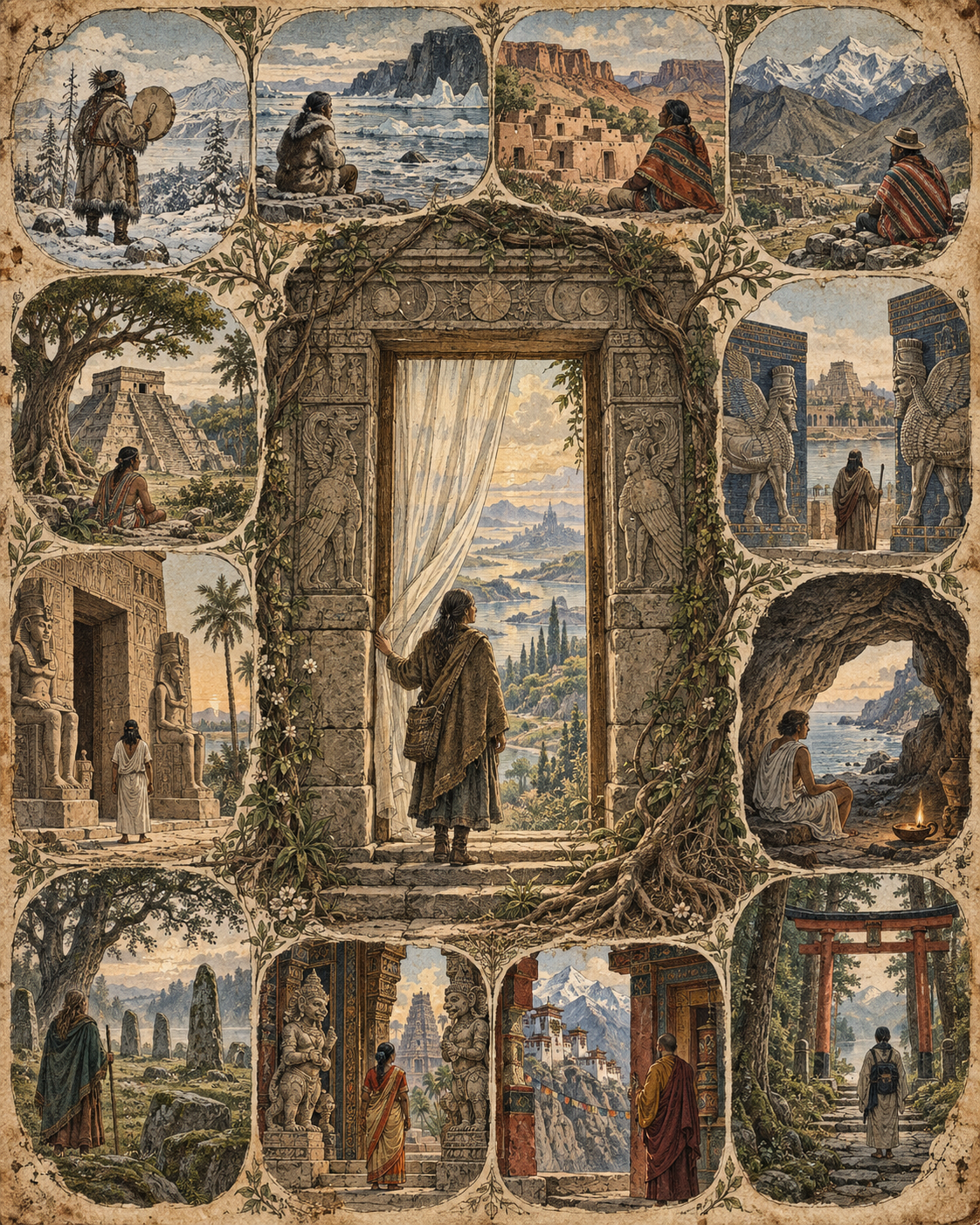
Metaphorically speaking, when you open a door, you should remember to close it. Otherwise, a draft may get in. Whatever we believe lies beyond that threshold, there is value in bringing an experience to a deliberate close: grounding ourselves, returning our attention to everyday life, and allowing space to reflect.
Perhaps science will one day help explain what we now describe through the language of energy, realms, and veils. Perhaps the explanation will challenge both believers and skeptics. Until then, we can remain open to the mystery without treating every unexplained event as proof.
This isn’t a reason to stop exploring. It’s a reason to prepare—and to give the return as much care as the departure.
The mystery deserves exploration. It also deserves honesty about what we know, what we believe, and what remains unanswered.