
China Rejected Argentine Beef Over a Banned Antibiotic. The Exporter Kept Shipping Beef to America. A 22-ton shipment, a prohibited drug, an unresolved investigation, expanding U.S. beef imports — and questions American regulators have not publicly answered
On March 19, 2026, China’s General Administration of Customs (GACC) notified Argentina that it had detected chloramphenicol in beef from one of Argentina’s major processors and suspended further imports from that plant.
lanacion.com.ar Chloramphenicol is a powerful antibiotic prohibited for use in food-producing animals in Argentina and the United States.
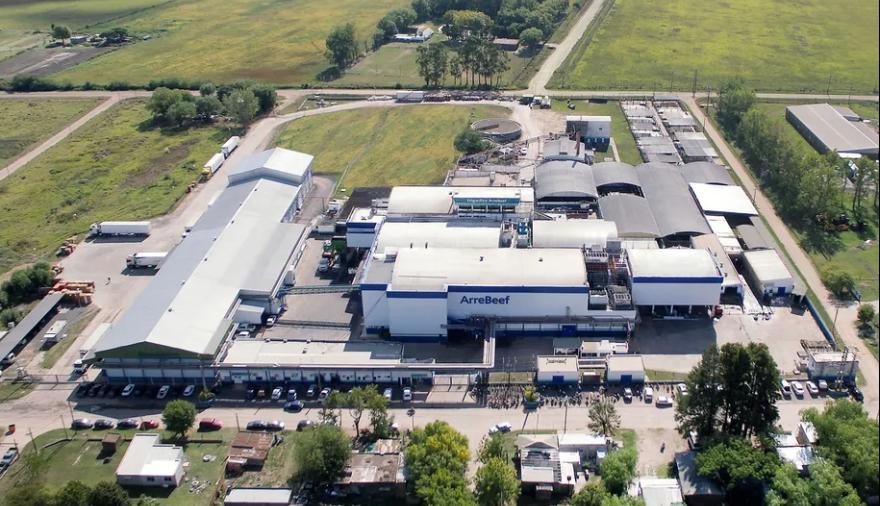
avmajournals.avma.org The beef came from ArreBeef S.A.’s slaughter-and-packing plant in Pérez Millán, Buenos Aires Province — Argentine sanitary establishment No. 2082. The disputed shipment was a single container of about 22 metric tons. Argentine reporting, citing official and industry sources, says the Chinese detection was in one box inside a container of bone-in beef, with no similar finding reported in the rest of that container.
lanacion.com.ar China’s response was immediate: it stopped accepting new shipments from establishment 2082.What happened afterward is more complicated. Argentina opened a traceability investigation and has publicly maintained that chloramphenicol is banned in livestock destined for food and that investigators have not found an explanation that accounts for China’s lab result.
dangdai.com.ar ArreBeef continued exporting beef to the United States. Less than three weeks after the Chinese suspension, ArreBeef’s CEO took part in an Argentine government launch specifically designed to expand beef sales in America.
argentina.gob.ar And all of this unfolded after the United States opened an additional 80,000 metric tons of tariff-favored import capacity for Argentine lean beef trimmings — capacity reserved entirely for Argentina.
public-inspection.federalregister.gov There is no evidence that the particular container China stopped was rerouted to the United States. That container was already bound for China; the extra U.S. quota covers a different product category, lean boneless trimmings used in ground beef. There is also no public evidence presented here that chloramphenicol has been detected in ArreBeef beef entering America. But there are legitimate questions about what American regulators knew, what they tested, and why China and the United States treated the same exporter so differently. What Is Chloramphenicol — and Why Is It Prohibited? This is not an obscure Chinese paperwork rule. The U.S. Food and Drug Administration has prohibited chloramphenicol in food-producing animals since 1984. The concern is not ordinary antibiotic residue. Chloramphenicol is associated with idiosyncratic, non-dose-dependent aplastic anemia — a rare but potentially fatal failure of bone-marrow blood-cell production. Because that reaction is not reliably tied to a specific dose, FDA has treated any food-animal use as an unacceptable human-health risk.
accessdata.fda.gov Argentina banned the drug in food animals in 1995. It remains available, under prescription, for some companion-animal and human uses. SENASA has said the product’s legal entry into Argentina is tightly controlled and is not authorized for cattle.
lavoz.com.ar China applies a zero-tolerance standard: any detectable residue is enough to reject a shipment and suspend the plant.
sc. group So when GACC reported a detection, the allegation was a violation that Argentina itself treats as serious. The Beef Came From ArreBeef No. 2082ArreBeef’s own site lists two official plants:
- Establishment No. 2082, Pérez Millán — a full-cycle plant that slaughters and packages.
- Establishment No. 1301, Escobar — a processing plant. arrebeef.com
Chinese and Argentine reporting tied the March suspension specifically to 2082. Argentine press has also noted a Quilmes slaughter plant associated with ArreBeef (CAIBER, formerly Finexcor) that was not the plant China listed as suspended, and from which the company could continue some exports.
clarin.com That distinction matters. A company-level shipping record is not the same thing as a plant-level sanitary certificate. ArreBeef lists the United States among the markets it serves. Being suspended in China at one establishment does not, by itself, remove the company from the U.S. market. Argentina Investigated — and Has Not Publicly Closed the Mystery SENASA, the Foreign Ministry, and the Agriculture Secretariat activated a joint protocol after the March 19 notice. They asked Beijing, through agricultural counselor Hernán Viola, for the box number, lot, and container details needed to finish farm-to-plant traceability. SENASA also asked China to send the positive box back to Argentina for testing. Officials said that without those details the traceability system could not be fully run.
lanacion.com.arWhat is firmly on the public record:
- SENASA began inspections and sampling at supplier farms linked to the shipment. lanacion.com.ar
- Officials reviewed the national residue-control program and said routine Argentine sampling had not been turning up chloramphenicol in cattle. lanacion.com.ar
- Working hypotheses included a false positive, a chemically similar compound, and cross-contamination. losandes.com.ar
- ArreBeef called the episode “strange,” pointed to the single-box finding, and even floated the possibility that product had been “planted.” No public evidence has established sabotage. lanacion.com.ar
Some secondary accounts describe a later, more detailed SENASA recap — including inspections of a specific number of cattle establishments and answers to Congress. Those details should be cited to a primary Argentine official document if the author has one. They are not independently confirmed in the open English- and Spanish-language press reviewed for this edit. The contradiction remains: China says it detected chloramphenicol. Argentina says it cannot show how the drug entered a cattle supply chain in which the drug is illegal. Neither a false positive nor cross-contamination has been established as the official final explanation. Publicly, the case is unresolved. This Was Not the First Chinese Allegation China reported chloramphenicol in Argentine beef in 2016. SENASA opened a traceability investigation then as well and said the drug had been banned in Argentina since 1995. Contemporary reports described a much larger commercial disruption — thousands of tons of Argentine beef held up — and later Argentine-Chinese talks that treated the episode as exceptional. Clarín’s 2026 reconstruction named the earlier plant as Ecocarnes, not ArreBeef.
clarin.com The parallel is real: twice in a decade, Chinese authorities reported the same prohibited antibiotic in Argentine beef, and both times the issue became a government-to-government investigation. The parallel does not prove the same cause, the same company, or a systemic finding about all Argentine beef. ArreBeef Continued Shipping Beef to America China suspended establishment 2082.The United States did not suspend ArreBeef. Public U.S. bill-of-lading data still show ArreBeef shipping frozen boneless beef into American ports after March 19. Import Genius lists hundreds of historical U.S. shipments tied to the company, with buyers including Orleans International and others, and a sample record arriving as recently as August 24, 2026 — about 26.99 metric tons of frozen boneless beef in a single container.
importgenius.com That proves the company kept supplying the American market after China closed the Pérez Millán plant. It does not prove every U.S. container came from establishment 2082. Maritime records usually name the exporting firm, not always the Argentine sanitary-establishment number. ArreBeef has more than one plant. One more product distinction: the China container was described as bone-in beef. The extra U.S. quota opened in February is limited to specified lean beef trimmings — grinding meat, not the same cut category China stopped. Then Came the American Quota Expansion The timing is not imaginary. It is also not proof of a swap. On February 6, 2026 — more than a month before China’s action — President Donald Trump signed a proclamation increasing the in-quota volume of lean beef trimmings by 80,000 metric tons for calendar year 2026 and allocating that entire additional amount to Argentina. It is administered in four quarterly tranches of 20,000 metric tons. Argentina’s pre-existing country quota of 20,000 metric tons remained in place, so the combined preferential ceiling for 2026 was described by Argentine and U.S. sources as up to 100,000 metric tons.
congress.gov The extra quota applies only to lean trimmings classified under specific HTSUS statistical numbers. It is not a blanket opening of the entire U.S. beef market to Argentina. The commercial effect, however, has been large. Argentine shipments to the United States rose sharply after the quota change. One compilation of official statistics put January–May 2026 U.S.-bound volume at about 42,800 metric tons. Industry figures for the first half of 2026 put U.S. shipments at about 54,150 metric tons, nearly triple the year-earlier pace. May alone was reported at about 11,000 metric tons.
upi.com ArreBeef was already among the Argentine plants assigned a sizable share of the regular U.S. quota before the China case. A January 2026 allocation put ArreBeef second among industrial plants, at about 1,618 metric tons of the 19,000-ton industry slice.
snrhoy.com.ar On August 26, 2026, the White House issued a separate proclamation temporarily adding 300,000 metric tons of lean-trimming quota for 2026. That later action is not Argentina-only. The February Argentina-specific 80,000 tons remain in force.
whitehouse.gov Three Weeks After China’s Suspension, ArreBeef Was on the U.S. Promotion Stage On April 8, 2026 — 20 days after the March 19 suspension — Argentina announced Semana de la Carne Argentina en Estados Unidos, a commercial mission to raise U.S. sales. The launch was at Casa Rosada. Events ran April 27–May 1 in Philadelphia, Chicago, and Los Angeles.
argentina.gob.ar Among the executives present at the official launch was Hugo Borrell, CEO of ArreBeef. The timing does not prove misconduct. It is relevant. While establishment 2082 was barred from China over an unexplained prohibited-residue finding, the company’s chief executive was standing in a government-backed campaign to sell more Argentine beef in the United States. Local reporting also said the China halt slowed slaughter at Pérez Millán and delayed the return of some temporary workers. That is a labor and commercial consequence, not evidence about U.S. product.
snrhoy.com.ar So What Does America Actually Inspect? Imported beef does not roll off a ship and into a supermarket. FSIS requires imported meat to be presented for reinspection at an approved import inspection establishment. Inspectors check certification, labeling, and condition. USDA’s Public Health Information System assigns additional tasks using the compliance history of the country and the foreign plant.
fsis.usda.gov That is not chemical testing of every box for every banned drug. Residue testing is sampling. FSIS describes a performance-based system: routine document-and-condition checks on all presented lots, plus additional types of inspection — including laboratory residue analysis — assigned by risk and volume. An annual import residue plan sets an initial sampling rate for each country based on how much product that country sends. FSIS can also stand up a special sampling plan for a particular residue when it has a violative U.S. finding or other information indicating a human-health risk. That authority does not require USDA to have found the chemical first. That is the unanswered operational question: After China told Argentina it had detected chloramphenicol in beef from a plant that also ships to America, did FSIS increase chloramphenicol testing of ArreBeef or of Argentine beef? No public FSIS notice located for this article announces such a special plan. No public USDA announcement suspended ArreBeef or establishment 2082 from the U.S. market because of China’s finding. Absence of a public notice is not proof that nothing happened internally. It is proof that enhanced surveillance has not been documented in the open record. How Many Inspectors Check Imported Meat? Older FSIS and Congressional Research Service descriptions said about 65 FSIS import inspectors worked at roughly 113 to 150 official import establishments. Those figures are not a verified 2026 headcount and should not be treated as one.
everycrsreport.com The inspectors do not personally examine every pound. The system is documents, physical reinspection, computerized tasking, and lab sampling. The better question is whether sampling intensity rose with Argentine volume after a foreign competent authority reported a prohibited residue. What Happens If American Inspectors Find a Problem? Product that fails U.S. requirements can be marked “U.S. Refused Entry.” It generally must be exported, destroyed, or — only if legally eligible and separately approved — diverted to animal food. An illegal chemical residue is not “fixed” with a new label and sold as human food. A recent case shows that the reinspection gate has teeth even without a contamination finding. In August 2026, FSIS announced a recall of about 29,628 pounds (13.4 metric tons) of Argentine boneless beef imported by Corte Argentino USA LLC and produced at Frigorífico Gorina (Argentine establishment 2025), because it had been distributed before mandatory import reinspection was completed. Argentine officials said the failure was administrative, not a contamination finding. FSIS reported no confirmed illnesses. The recall is not an ArreBeef case and should not be blurred into one.
content.gov delivery.com It does show that USDA’s import step is not theoretical. What We Can Say — and What We Cannot The version of this story circulating online is: China rejected contaminated Argentine beef, so Argentina sent the same beef to America. he public evidence does not establish that. What it does establish:
- On March 19, 2026, China reported chloramphenicol in about 22 tons of bone-in beef from ArreBeef establishment 2082 and suspended that plant. biobiochile.cl
- Argentina investigated, advanced false-positive and contamination hypotheses, and has not published a complete public explanation.
- China made a similar allegation against Argentine beef in 2016; that case involved a different plant.
- ArreBeef kept shipping frozen boneless beef to U.S. ports after the Chinese suspension, including in August 2026. importgenius.com
- In February, the United States reserved an extra 80,000 metric tons of lean-trimming quota for Argentina. U.S.-bound Argentine shipments then surged.
- On April 8, ArreBeef’s CEO joined the official launch of Argentine Beef Week in the United States.
- USDA has tools to intensify or target residue testing when foreign information indicates a human-health risk. No public record reviewed here shows whether those tools were used for chloramphenicol after March 19.
The Question America Deserves Answered The responsible question is not: “Did America buy China’s contaminated beef?” That has not been proved. The question the record supports is: What did USDA do after another major importing country detected a prohibited antibiotic in beef from a company that was still supplying the United States? Did American regulators independently test beef from establishment 2082 for chloramphenicol? Did they increase sampling of ArreBeef shipments? Did China share its laboratory package with USDA? Did USDA review the finding and decide no extra action was needed? Has 2082 continued to appear on specific U.S. certificates after March 19? And what became of the original 22 tons — returned, destroyed, held, or retested? Those are factual questions. The answers sit in government files, lab reports, and commercial certificates. For now, one contrast is clear. China reported a prohibited antibiotic and suspended the plant. Argentina investigated and has not publicly explained the result. The United States kept receiving ArreBeef cargoes while widening tariff-rate access for Argentine grinding beef. That does not prove unsafe meat reached an American table. It is enough to ask what testing occurred before it could.
Sources
- LA NACIÓN – “Drástica medida: China suspendió las exportaciones de un importante frigorífico argentino” (March 19/20, 2026): https://www.lanacion.com.ar/economia/campo/drastica-medida-china-suspendio-las-exportaciones-de-un-frigorifico-argentino-nid19032026/
- LA NACIÓN – “Extraño: investigan cómo un antibiótico llegó hasta la carne de un frigorífico suspendido por China” (March 27/28, 2026): https://www.lanacion.com.ar/economia/campo/extrano-investigan-como-un-antibiotico-llego-hasta-la-carne-de-un-frigorifico-suspendido-por-china-nid27032026/
- Los Andes – “Carne argentina con un antibiótico prohibido: esto se sabe tras el rechazo de China” (March 28, 2026): https://www.losandes.com.ar/economia/carne-argentina-un-antibiotico-prohibido-esto-se-sabe-el-rechazo-china-n5985677
- Clarín – “Carne suspendida en China: el SENASA activó una fuerte oposición diplomática…” (March 25, 2026): https://www.clarin.com/rural/carne-suspendida-china-senasa-activo-fuerte-oposicion-diplomatica-defensa-frigorifico_0_506adWRXJG.html
- Argentina.gob.ar – Official launch of “Semana de la Carne Argentina en Estados Unidos,” listing Hugo Borrell, CEO of ArreBeef (April 8, 2026): https://www.argentina.gob.ar/noticias/karina-milei-encabezo-el-lanzamiento-de-la-semana-de-la-carne-argentina-en-estados-unidos
- Federal Register / Presidential Proclamation 11010 – “Ensuring Affordable Beef for the American Consumer” (80,000 metric tons additional quota allocated to Argentina, Feb. 6, 2026): https://www.govinfo.gov/content/pkg/FR-2026-02-13/pdf/2026-03050.pdf
- White House – Further proclamation temporarily adding 300,000 metric tons of lean-trimming quota (Aug. 26, 2026): https://www.whitehouse.gov/presidential-actions/2026/08/further-ensuring-affordable-beef-for-the-american-consumer/
- ImportGenius – ArreBeef S.A. U.S. shipment records (sample arrival Aug. 24, 2026, ~27 metric tons frozen boneless beef): https://www.importgenius.com/suppliers/arrebeef-sa
- USDA FSIS – Recall of ~29,628 lbs Argentine beef (Corte Argentino USA / Frigorífico Gorina, missing reinspection, Aug. 7, 2026): http://www.fsis.usda.gov/recalls-alerts/corte-argentino-usa-llc-recalls-raw-beef-products-imported-without-benefit-import
- FDA – Longstanding prohibition of chloramphenicol in food-producing animals (background): search “chloramphenicol” on accessdata.fda.gov
- SAN fact-check of the viral claim (Aug. 25, 2026): https://san.com/cc/viral-post-claims-trump-is-buying-contaminated-beef-heres-what-we-found/