
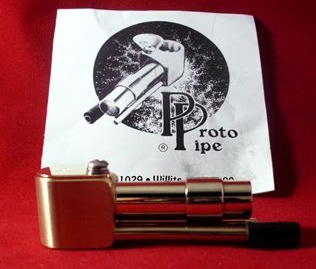
American Originals The Proto Pipe
The Ingenious Little Brass Machine That Refused to Become Obsolete
By Wesley Tyler
“Some inventions solve a problem. Others quietly redefine an entire category. The Proto Pipe somehow managed to do both.”
A Personal Note
Full disclosure: Yes, I own two original Proto Pipes. I’ve had them for roughly thirty-five years, and they’ve spent the last few decades living a much quieter life than they once did. Today I appreciate them not for their original purpose, but as remarkable examples of American industrial design, clever engineering, and the kind of craftsmanship that has become increasingly rare.
This isn’t an endorsement of smoking or cannabis culture. It’s an appreciation of the inventors, machinists, artists, and entrepreneurs who transformed a simple idea into an object that has endured for more than half a century. Sometimes the story behind an invention is every bit as fascinating as the invention itself, and I believe the Proto Pipe is one of those stories.
[PHOTO – My two original Proto Pipes]
Caption: Two original Proto Pipes that have been in my collection for roughly thirty-five years. Today they’re appreciated as examples of ingenious American industrial design.
There are certain objects that transcend their original purpose.
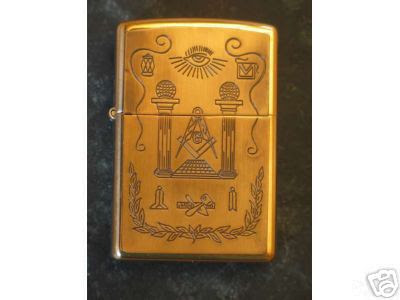
A Zippo lighter is more than a lighter. A Leatherman is more than a multitool. The Apple II was more than a computer. Each became an icon because someone looked at an everyday object and asked a simple question:
“ᕼOᗯ ᑕᗩᑎ TᕼIᔕ ᗷE ᗷETTEᖇ?”
The Proto Pipe belongs in that company.
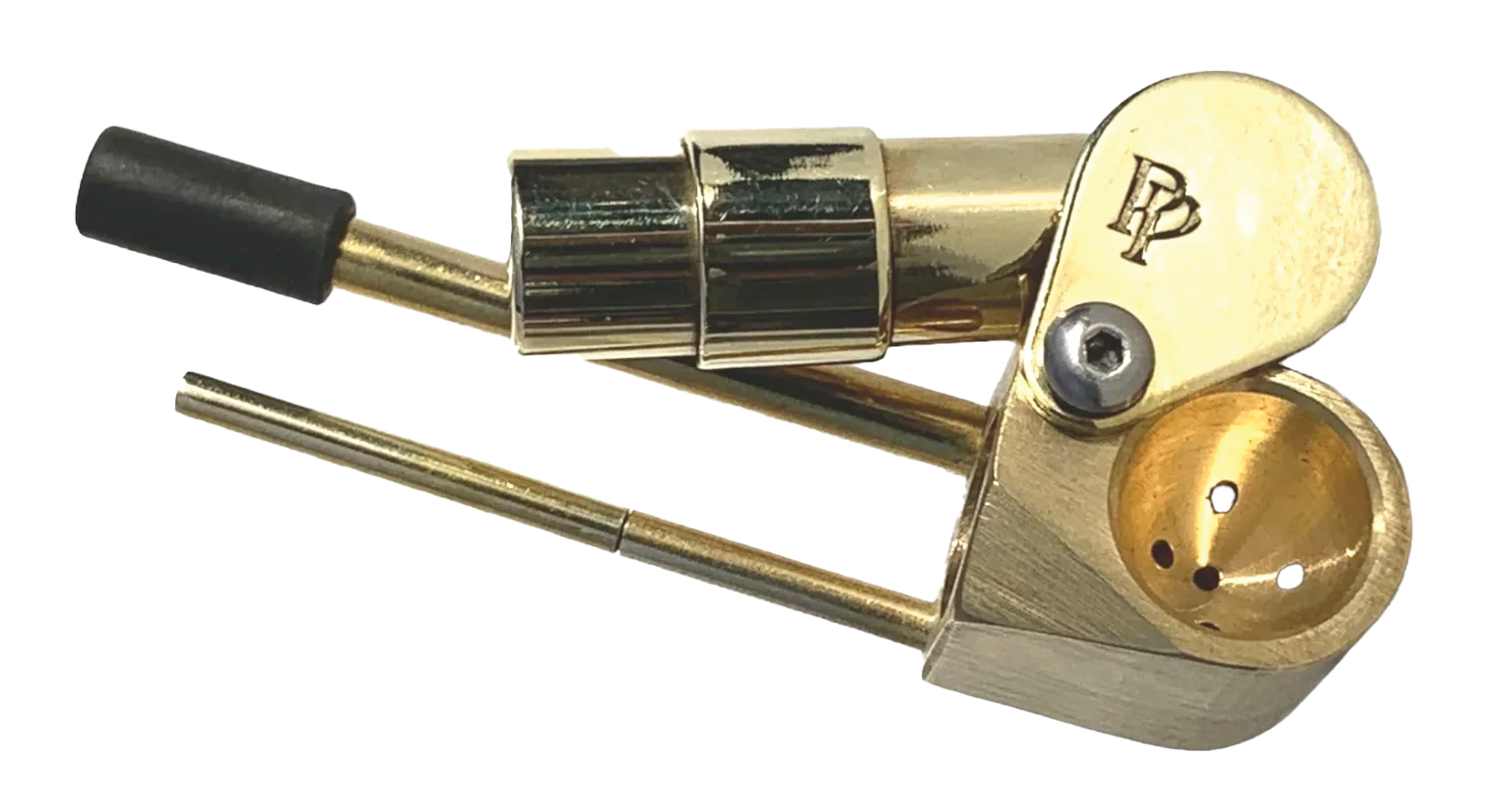
At first glance, it looks like an odd little brass gadget—part pocket watch, part plumbing fixture, part machine shop experiment. Pick it up, however, and the engineering begins to reveal itself. A swiveling lid covers the bowl. A hidden poker slides neatly into place. A removable storage compartment tucks beneath the stem. Deep inside the body, an ingenious tar trap captures residue before it reaches the airway.
Every feature solves a problem.
This wasn’t simply another smoking pipe.
It was a carefully engineered machine.
Like many of history’s most interesting inventions, it wasn’t created by a large corporation or an engineering team hidden inside some anonymous office building. It was born from the imagination of one man with a drafting table, a handful of machine tools, and the stubborn belief that everyday objects could be improved through thoughtful design.
That man was Phil Jergenson.
Long before “maker culture” became fashionable, and decades before crowdfunding promised to turn every garage project into the next billion-dollar startup, Jergenson embodied an older tradition of American ingenuity. He was a draftsman, machinist, carpenter, inventor, artist, and entrepreneur who believed good ideas deserved to exist simply because they worked better.
His invention arrived at precisely the right moment.
The late 1960s and early 1970s were a period of remarkable experimentation. Americans were putting astronauts on the Moon, building home computers in garages, customizing motorcycles, restoring antique machinery, and filling workshops with projects that reflected equal parts creativity and mechanical curiosity.
Against that backdrop, the Proto Pipe emerged as a product of both engineering discipline and counterculture independence.
It wasn’t flashy.
It wasn’t disposable.
It wasn’t built to follow trends.
It was built to last.
More than fifty years later, the Proto Pipe remains one of the best-known and most enduring pieces of industrial design to emerge from the American counterculture movement. Collectors still seek out early examples. Original advertisements have become artifacts in their own right. The ingenious little brass machine continues to be manufactured, repaired, collected, and appreciated by people who admire thoughtful craftsmanship.
This is the story of the Proto Pipe—but it’s also the story of the man behind it, the artist who gave it a visual identity, and the remarkable era that allowed an invention like this to become an icon.
Because sometimes the most fascinating stories aren’t about the biggest inventions.
They’re about the smartest ones.
Meet Phil Jergenson
“Every great invention begins with someone becoming dissatisfied with the way things have always been done.”
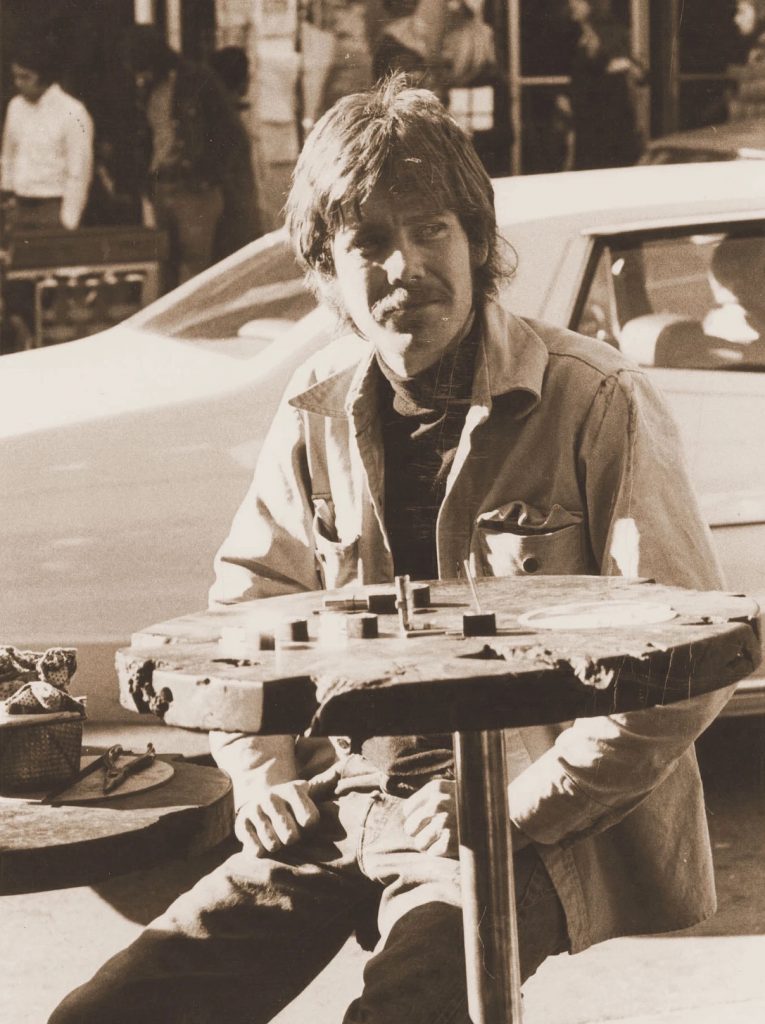
Long before the Proto Pipe became an icon of American counterculture, it existed only as an idea in the mind of a young draftsman from Denver, Colorado.
Philip E. Jergenson wasn’t a celebrity inventor, nor was he backed by a large corporation with research laboratories and engineering departments. He belonged to a tradition that once seemed almost uniquely American—the independent inventor. Men and women who sketched ideas on paper, learned by doing, and built prototypes with whatever tools they could afford.
Throughout his life, Jergenson was a draftsman, carpenter, machinist, designer, artist, and entrepreneur. Each skill influenced the invention that would eventually define his career.
Drafting taught him precision.
Carpentry taught him how materials behave.
Machining taught him what could actually be manufactured.
Art taught him that even a utilitarian object could possess beauty.
Those disciplines eventually came together around a deceptively simple question:
Why are smoking pipes still so primitive?
During the late 1960s, most pipes followed designs that had changed very little for generations. They worked, but only after users accepted a long list of compromises. Screens burned out and needed replacing. Cleaning often meant digging around with improvised tools. Sticky residue accumulated in places that were difficult to reach. Pocketing a loaded pipe usually meant hoping nothing spilled.
To Jergenson, that wasn’t good enough.
Instead of designing another pipe, he approached the problem the way an engineer might approach a precision instrument. Every inconvenience became a design challenge.
If people carried a poker, why shouldn’t the pipe carry one too?
If residue built up inside the airway, why not create a removable chamber to collect it?
If loose material spilled from the bowl, why not engineer a lid?
If spare material needed to be carried separately, why not integrate storage directly into the body?
One solution led to another.
Soon, what had started as a smoking pipe was evolving into a compact mechanical system.
To build his prototypes, Phil taught himself machining on a small Austrian-made Unimat combination lathe and milling machine. Though modest in size, it was capable of remarkable precision in skilled hands. Prototype after prototype emerged from his workbench as he refined the idea.
The work was slow.
Ideas that looked perfect on paper sometimes failed in metal.
Threads had to fit perfectly.
Moving parts had to slide smoothly.
Components needed to come apart for cleaning without falling apart during use.
Every improvement introduced another challenge.
Good engineering rarely appears all at once.
It evolves through persistence.
By the end of the 1960s, Jergenson had something genuinely different.
Not merely another brass pipe.
A machine.
He called it The Smoking Contrivance.
It was an unusual name, but a fitting one. Before anyone described it as the “Swiss Army knife of pipes,” Phil Jergenson had already built exactly that.
Looking back today, it’s tempting to think the Proto Pipe’s success was inevitable.
It wasn’t.
The invention still had to survive manufacturing challenges, financial uncertainty, copycats, and the unpredictable currents of the American counterculture.
Before it became a legend…
…it first had to find its audience.
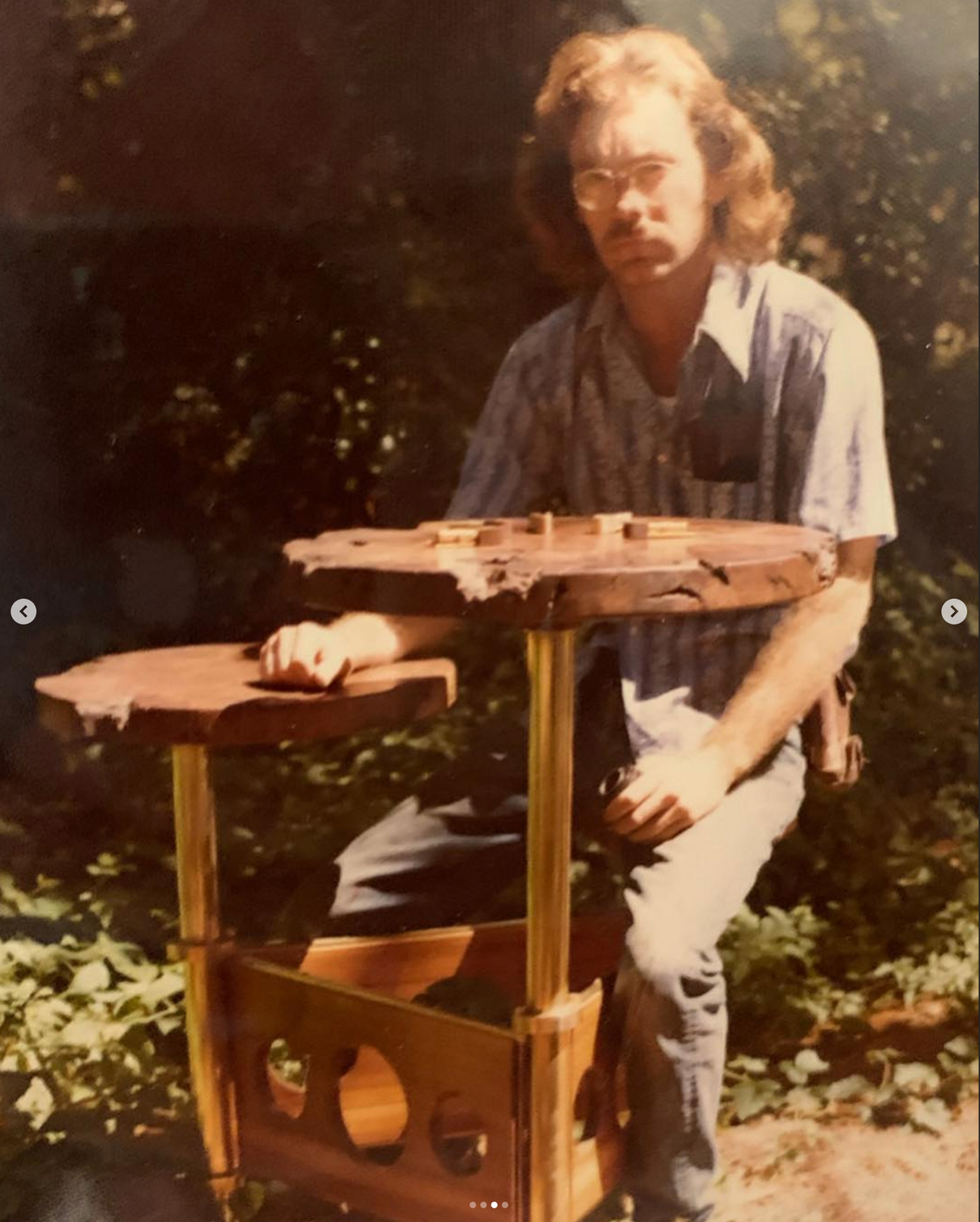
Telegraph Avenue
Where the Contrivance Found Its Audience
By the early 1970s, America was changing.
The optimism of the Apollo program was giving way to the uncertainty of Vietnam. Long hair had become less of a fashion statement than a declaration. Volkswagen buses wandered the highways carrying musicians, artists, students, craftsmen, and dreamers searching for a different way of life.
In Berkeley, California, there was perhaps no better place to find them than Telegraph Avenue.
For decades, Telegraph Avenue had been one of America’s great cultural crossroads. Stretching south from the University of California campus, the street pulsed with bookstores, record shops, coffee houses, political activists, musicians, artists, and independent merchants. If something unusual or innovative was going to find an audience, chances were good it would happen there.
Phil Jergenson understood that instinctively.
After relocating to Northern California, he found himself surrounded by people who appreciated handmade craftsmanship and clever engineering. His invention wasn’t simply another smoking pipe—it represented a different philosophy. It was practical without being ordinary, mechanical without being cold, and thoughtfully overbuilt in an era increasingly fascinated by disposable products.
Armed with little more than determination and a growing collection of brass Smoking Contrivances, Phil reportedly demonstrated and sold his creations along Telegraph Avenue, even powering some of his equipment with a small gasoline generator.
There was no polished showroom.
No venture capital.
No national distributor.
Just the inventor…
…and the invention.
Imagine stopping at his table on a warm Berkeley afternoon.
At first glance you notice an unusual brass object that looks more like scientific equipment than a traditional pipe.
“What is that?”
Phil smiles.
He opens the lid.
Slides out the poker.
Unscrews the storage compartment.
Shows you the removable tar trap.
Within moments, what first appeared to be a curious brass gadget becomes a fascinating mechanical puzzle.
The demonstration became the sales pitch.
People weren’t simply buying a pipe.
They were buying ingenuity.
That distinction mattered.
The same generation experimenting with alternative lifestyles also appreciated beautifully engineered cameras, handcrafted bicycles, custom motorcycles, precision audio equipment, and innovative outdoor gear. The Smoking Contrivance fit naturally into that world.
Every sale funded another batch.
Every customer became an unofficial ambassador.
Yet selling handcrafted brass pipes one at a time from a sidewalk was hardly a recipe for financial security. Phil continued working as a carpenter while building pipes whenever he could.
Then he made a decision that changed the course of his little company forever.
The Advertisement That Changed Everything
In 1972, Phil Jergenson and his brothers took a gamble.
Money was tight.
Very tight.
Different accounts place the cost of their advertisement somewhere between $120 and $200—a considerable investment for a struggling inventor trying to launch a mail-order business.
They purchased a small advertisement in Rolling Stone magazine.
It wasn’t flashy.
It wasn’t printed in color.
There were no celebrity endorsements.
Just a curious little brass invention called The Smoking Contrivance.
![[IMAGE – Representative Proto Pipe advertisement]](https://wesleytyler.com/wp-content/uploads/2026/07/ecPfk3u0GcWaRat5eSFEUCSh_u9cWfVl9dH4TMTUfUpXp40FQYAF5KS4BYnvaVPWC8BMaWaBOEedCHJYGMokNZcHXLgprs_nneH6pyKq07L2jkwHCgfI4mw_GDs6PcGMFgECdvHU6xDl85xmdUxkEAL2JwE2XXtezZz9h2JMQhQo5fd262NEsxVHX6IrxaK--scaled.jpg)
This is not The small Rolling Stone advertisement that introduced thousands of readers to Phil Jergenson’s remarkable invention.
At first…
Almost nothing happened.
The mailbox remained mostly empty.
For many inventors, that would have been the end of the story.
Then Phil’s brother Kent called.
Their post office box was overflowing with orders.
That small advertisement had done exactly what it was supposed to do.
It connected one inventor with thousands of curious readers across America.
Looking back today, it’s difficult to appreciate how revolutionary mail-order entrepreneurship once was.
There was no website.
No online shopping cart.
No social media.
If you wanted a Smoking Contrivance, you clipped the advertisement, filled out the order form, mailed a check, and waited.
Weeks later, a carefully machined brass invention would arrive in your mailbox.
It required trust.
Fortunately, Phil had built something worth waiting for.
From “Smoking Contrivance” to “Proto Pipe”
The original name fit the invention perfectly.
It was, after all, a contrivance—a clever mechanical device assembled to solve practical problems.
But as the business grew, so did the need for a name that people would remember.
According to company history, someone accidentally referred to it as the “Proto Pipe” instead of a “prototype pipe.”
Everyone stopped.
The new name was shorter.
Cleaner.
Easier to remember.
It stuck.
Sometimes the best branding isn’t created in a boardroom.
Sometimes it simply happens.
High Times
Finding the Perfect Audience
If Rolling Stone introduced the invention…
High Times introduced it to the people most likely to appreciate it.
Launched in 1974, High Times quickly became far more than a cannabis magazine. It celebrated underground art, music, humor, design, travel, and a growing culture that valued creativity and independent thinking.
The Proto Pipe fit perfectly.
Beginning with advertisements in the magazine’s early issues—including Issue #2 in the spring of 1975—the company reached readers who immediately understood what made the invention different.
Advertising continued for years, helping establish the Proto Pipe as one of the most recognizable products of its kind.
The advertisements themselves became collectible.
They weren’t dry product listings.
They were imaginative.
Funny.
Mechanical.
Psychedelic.
The Proto Pipe wasn’t marketed as a luxury item.
It was presented as an ingenious piece of engineering waiting to be discovered.
Larry Todd
The Artist Who Gave the Proto Pipe Its Personality
Every memorable product eventually finds the artist capable of explaining it to the world.
For the Proto Pipe, that artist was Larry Todd.
Todd had already earned recognition in the underground comix movement through his work on Dr. Atomic, blending science fiction, satire, machinery, humor, and psychedelic imagination into a style that was unmistakably his own.
When Larry Todd joined the Proto Pipe family, something remarkable happened.
Phil Jergenson had built the machine.
Larry Todd gave it personality.
Todd redesigned advertisements.
Created instruction sheets.
Helped shape the company’s visual identity.
Most importantly, he created Probot, the cheerful robot mascot that became inseparable from the Proto Pipe itself.
![[IMAGE – Larry Todd advertisement]](https://wesleytyler.com/wp-content/uploads/2026/07/c4f3e2_79ec138390a74216bc3872091ae508c7mv2.jpg)
Caption: Larry Todd’s unforgettable illustrations transformed the Proto Pipe into one of the most visually recognizable products of the counterculture era.
Even the instruction sheets became miniature works of art.
Instead of dry technical diagrams, readers found humor, personality, and illustrations that encouraged them to explore every hidden chamber and moving part.
It was industrial design wrapped in underground comics.
Few products have ever enjoyed such a successful partnership between engineering and illustration.
Today, vintage Proto Pipe advertisements, instruction sheets, and Larry Todd artwork are collected almost as eagerly as the pipes themselves.
Looking back, those pages weren’t simply selling a product.
They were preserving a moment in American culture when inventors, artists, and entrepreneurs still shared the same pages of a magazine—and occasionally changed history together.
The Machine
Why the Proto Pipe Was Different
There is an old saying among machinists:
“Simple isn’t easy.”
Anyone can make something complicated.
Making something simple—something that solves several problems without creating new ones—is much harder.
At first glance, the Proto Pipe appears almost overengineered. There are hidden chambers, a removable poker, a storage compartment, a swiveling lid, and a removable tar trap. Brass parts thread together with the precision of a well-made tool rather than the casual fit of an everyday consumer product.
Yet after spending only a few minutes with one, something interesting happens.
Nothing feels unnecessary.
Every feature solves a problem.
Every moving part has a purpose.
The Proto Pipe isn’t complicated because Phil Jergenson enjoyed making complicated things.
It’s complicated because he disliked compromise.
Start with the Bowl
The bowl itself looks almost ordinary.
Almost.
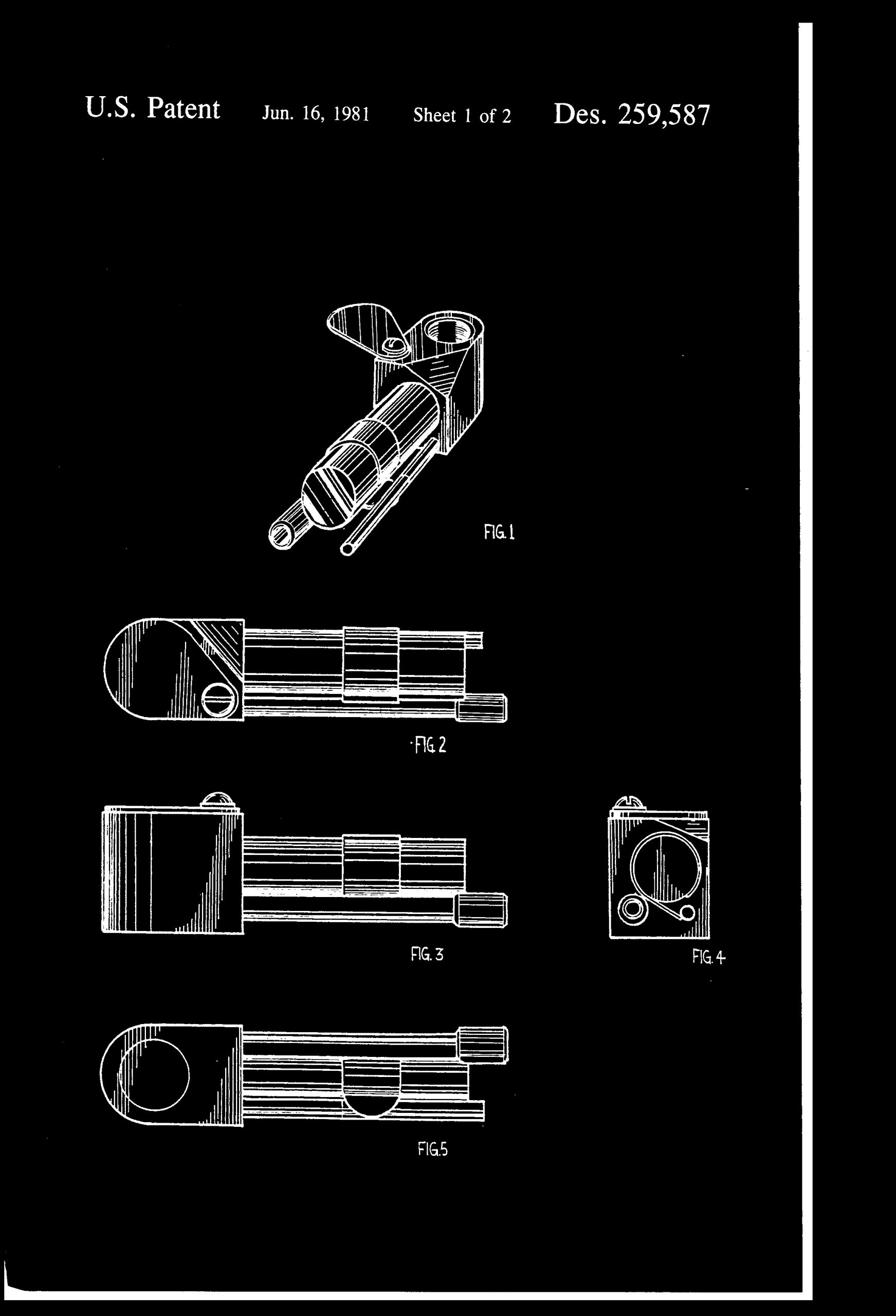
Instead of relying on a fragile metal screen that eventually burns through or falls out, Jergenson machined permanent draft holes directly into the brass body. There was nothing to replace, nothing to lose, and nothing to remember to buy later.
It seems obvious today.
It wasn’t in the late 1960s.
The brass itself became part of the engineering.
Heavy enough to survive decades of use.
Soft enough to machine with precision.
Beautiful enough to age gracefully.
Unlike chrome plating or painted finishes, brass develops character over time. The scratches, worn edges, and darkened patina become part of the object’s history rather than signs of failure.
Old Proto Pipes don’t simply become worn.
They become personal.
The Lid
The swiveling lid may be the simplest feature on the pipe, but it’s also one of the smartest.
Instead of carrying a loaded pipe carefully and hoping nothing spilled into a pocket, the bowl could simply be closed.
No rubber cap.
No separate accessory.
No improvised solution.
Just rotate the brass cover.
Problem solved.
The lid also reduced airflow, often helping extinguish the remaining contents naturally.
One movement.
Two problems solved.
That kind of thinking appears throughout the entire design.
The Poker
Most smokers carried one.
Phil built one into the pipe.
The poker slides neatly into its own recess beneath the body where it remains protected, accessible, and almost invisible.
Need to clear the bowl?
It’s already there.
Need to clean the airway?
Already there.
Need to push out the tar trap?
Already there.
The Proto Pipe didn’t ask users to carry extra tools.
It became the tool.
The Hidden Chamber
Unscrew the cylindrical compartment beneath the stem and you’ll find another thoughtful touch—a built-in storage chamber.
Again, the brilliance isn’t simply that storage exists.
It’s where it’s located.
It doesn’t make the pipe noticeably larger.
It doesn’t upset the balance.
It simply makes use of space that would otherwise have gone unused.
Good engineering often feels obvious once you’ve seen it.
That’s usually the sign of a great idea.
The Tar Trap
Now we arrive at the feature that truly set the Proto Pipe apart.
The tar trap.
Most pipes allowed residue to build up throughout the airway, gradually affecting both performance and taste. Cleaning usually meant improvising with wires, pipe cleaners, or whatever happened to fit.
Phil approached the problem differently.
Instead of allowing residue to travel through the entire pipe, he designed a removable brass cup beneath the bowl where much of it could collect first.
Remove the trap.
Clean it.
Replace it.
Continue.
Simple.
Elegant.
Mechanical.
The best inventions often make us wonder why no one thought of them sooner.
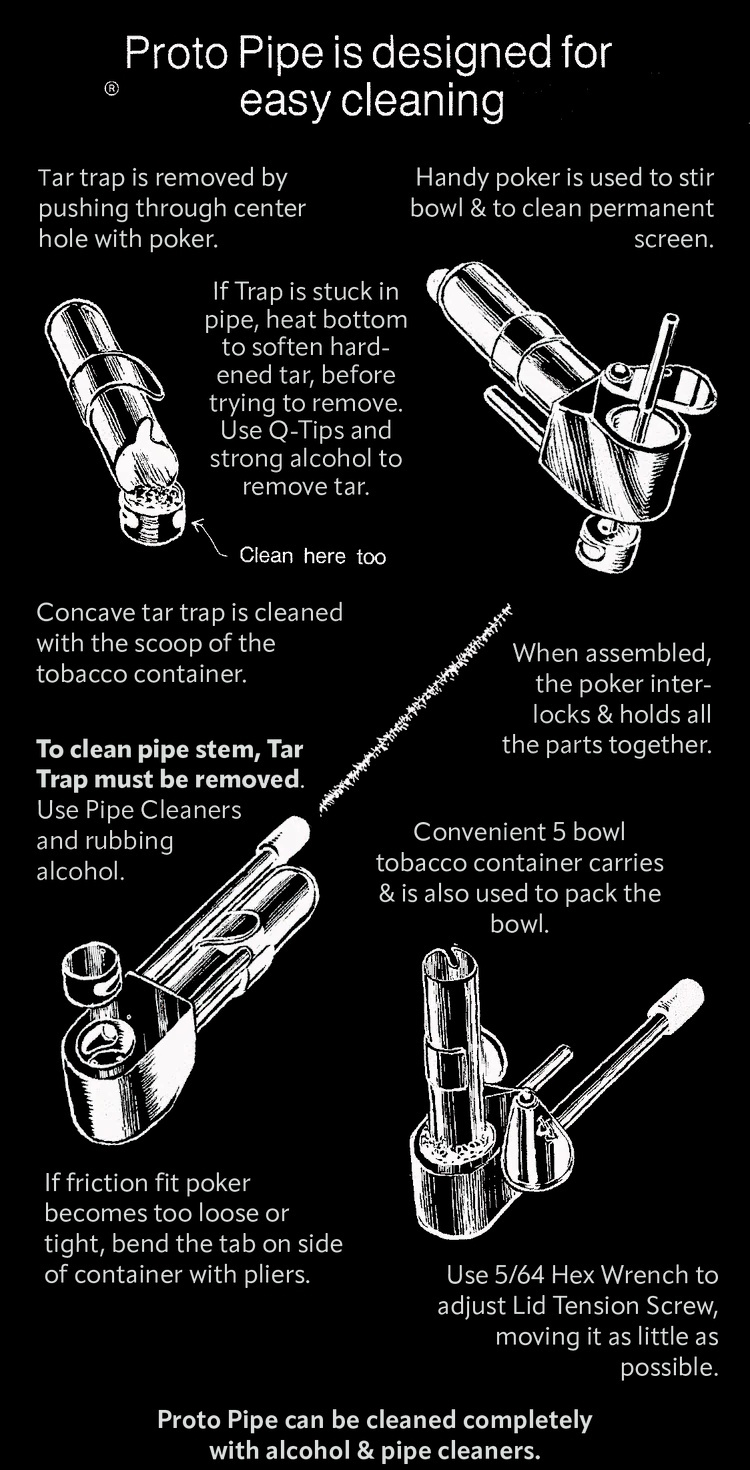
Caption: Every major component of the Proto Pipe was designed to solve a specific problem while remaining easy to disassemble and maintain.
Beyond the Proto Pipe
One of the things I found most interesting while researching Phil Jergenson was discovering that the Proto Pipe wasn’t the only expression of his creativity.
Inventors rarely stop inventing.
Jergenson later devoted much of his creative energy to Grid Beam, a modular construction system that allows builders to create everything from furniture and workbenches to trailers and small structures using standardized beams and simple hardware. Like the Proto Pipe, it emphasized thoughtful engineering, efficient use of materials, and designs meant to be modified rather than discarded.
He also built beautifully crafted vardos, often called Gypsy wagons—ornate, horse-drawn living wagons inspired by the traditional traveling homes of Britain and Europe. Rich woodwork, graceful curved roofs, and meticulous craftsmanship revealed another side of his talent.
While vastly different in scale from a brass pocket tool, they reflected the same philosophy: make every inch count, solve problems elegantly, and never sacrifice craftsmanship.
Looking at the breadth of his work, it becomes clear that Phil Jergenson wasn’t simply the inventor of the Proto Pipe.
He was a designer.
A craftsman.
A builder.
![[IMAGE – Grid Beam project and one of Phil Jergenson's vardos]](https://wesleytyler.com/wp-content/uploads/2026/07/gridbeam5.jpg)
The Proto Pipe just happened to be the invention that introduced him to the world.
Caption: Phil Jergenson’s later projects demonstrated that his passion for thoughtful design extended far beyond the Proto Pipe.
Why It Still Matters
When I first sat down to write this article, I thought I was simply telling the story of an unusual smoking pipe.
Somewhere along the way, I realized I wasn’t.
I was writing about an inventor.
About craftsmanship.
About the satisfaction of solving a problem so well that the solution survives long after the world around it has changed.
I’ve owned two original Proto Pipes for roughly thirty-five years.
They retired long before I did.
Today they spend most of their time tucked safely away, occasionally finding their way into my hands whenever I feel like admiring a particularly clever piece of engineering.
I no longer look at them for their original purpose.
Instead, I see them as reminders of a time when products were expected to be maintained instead of replaced, repaired instead of discarded, and built to last instead of built until the warranty expired.
The scratches don’t detract from their beauty.
They add to it.
Researching Phil Jergenson only deepened my appreciation.
The Proto Pipe wasn’t the work of a corporation chasing market share.
It came from the imagination of an independent inventor who believed ordinary objects could be improved through careful thought, skilled hands, and a willingness to keep refining an idea until it was right.
For me, that’s the real story.
The Proto Pipe is certainly part of American counterculture history, but it’s also part of American industrial design history.
It reminds us that some of the most enduring inventions don’t come from massive research labs or billion-dollar corporations.
Sometimes they begin on a cluttered workbench surrounded by hand tools, brass shavings, coffee cups, and a notebook full of sketches.
Epilogue
There are countless products from the late 1960s and early 1970s that have disappeared into history.
They were replaced by something newer.
Cheaper.
Lighter.
More fashionable.
The Proto Pipe quietly refused to disappear.
Not because it was backed by a giant corporation.
Not because it was surrounded by flashy marketing.
It endured because the engineering was sound.
As someone who enjoys history, I find that encouraging.
Good ideas have a way of surviving.
If this article encourages even one reader to look a little more closely at the objects they use every day—to appreciate the engineering behind them, the craftsmanship that created them, and the people whose names are too often forgotten—then it has accomplished exactly what I hoped it would.
Because every well-made object has a story.
And every now and then…
That story deserves to be told.
History isn’t always found in museums. Sometimes it’s hiding in a toolbox, tucked away in a desk drawer, or resting on a shelf waiting for someone to ask, ‘Who made this, and why?’ This is one of those stories.
Sources
- Proto Pipe LLC – Company history and historical timeline
- U.S. Design Patent D259,587 (Philip E. Jergenson)
- Los Angeles Times – Feature on the history of the Proto Pipe
- Leaf Magazine – Cannthropology: The Proto Pipe
- World of Cannabis Museum
- The Comics Journal – Larry Todd retrospective