
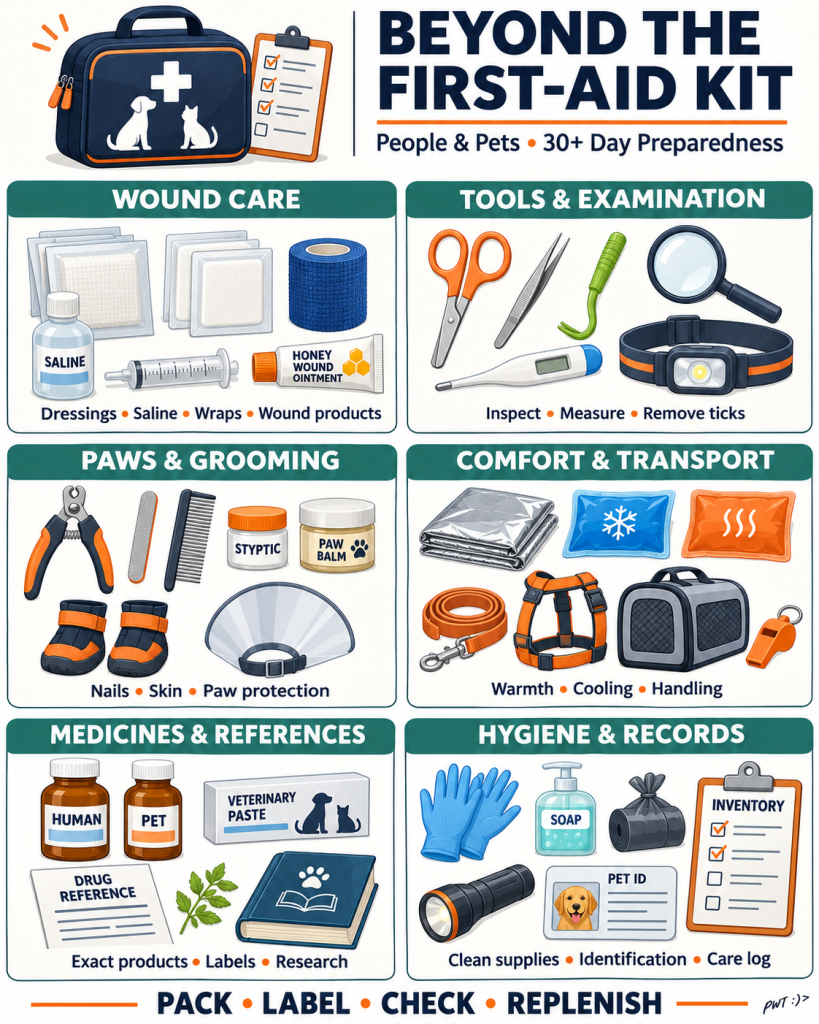
Beyond the First-Aid Kit: Medical and Pet Supplies for a Prolonged Grid Failure
A consolidated checklist for disruptions lasting more than 30 days. Food and drinking-water storage are outside this list’s scope. Quantities should account for repeated care, the number of people and pets, and replacement supplies.
1. Dressings, Bandages, and Bleeding-Control Supplies
- Sterile gauze pads in several sizes, including 2 × 2 and 4 × 4 inches.
- Nonstick wound-contact pads.
- Absorbent dressings and rolled gauze.
- Plain cohesive bandage wrap, such as Vetrap or SyrFlex.
- Medical tape and gentle paper tape.
- Adhesive bandages in assorted sizes.
- Butterfly bandages or wound-closure strips for suitable minor human cuts—not dirty punctures or animal bites.
- Triangular bandages and safety pins.
- Blister dressings and protective padding.
- Pet-labeled styptic powder or pencil for minor superficial bleeding, particularly nail-trimming nicks; separate from supplies for major bleeding.
2. Cleaning, Irrigation, and Wound Products
- Plain sterile saline wound wash.
- Sterile saline specifically labeled for eye irrigation.
- Needleless irrigation syringes in useful sizes.
- Eyedropper or bulb syringe.
- Mild soap and cleansing wipes appropriate to their intended use.
- Alcohol prep pads for their labeled uses, rather than routine irrigation of open wounds.
- Human-labeled hypochlorous-acid wound cleanser, such as an appropriate Puracyn product.
- Pet-labeled wound cleanser, such as an appropriate Vetericyn product.
- Silver Honey pet wound product, with its original instructions.
- Human-labeled sterile medical-honey dressings, with recall status checked.
- Povidone-iodine or chlorhexidine products where appropriate, retaining exact formulation and dilution instructions.
- Plain petroleum jelly for suitable minor human wounds and skin protection.
- Cotton-tipped applicators for appropriate external applications—not probing wounds or ear canals.
- Clean washcloths, full-size towels, and compressed towels.
3. Examination Tools and Small Equipment
- Blunt-ended bandage scissors.
- Fine-tipped tweezers for ticks and superficial splinters.
- Dedicated tick-removal tool.
- Packaged superficial splinter-removal tools.
- Magnifying glass.
- Small inspection flashlight and hands-free headlamp.
- Spare batteries or a suitable charging arrangement.
- Digital human thermometer.
- Separately labeled pet thermometer and suitable lubricant.
- Tongue depressors.
- Small mirror.
- Cleanable tray or work surface.
- Small sealable bags for keeping items organized.
4. Grooming, Nails, Paws, and Skin
- Pet nail clippers.
- Nail file.
- Fine-tooth flea comb.
- Grooming comb, brush, or grooming glove.
- Pet-specific paw protectant or balm.
- Disposable or washable paw booties in the correct size.
- Recovery cone or appropriately fitted recovery collar that prevents access to the affected area.
- Species-appropriate flea and tick prevention.
- Human-labeled skin protectants and antifungal products for their intended uses.
- Sting-relief wipes or products with ingredients and species suitability clearly identified.
- Spare socks, protective footwear, and padding for human foot care.
5. Handling, Restraint, and Transport
- Spare leash and emergency slip lead.
- Properly fitted collar or harness with identification.
- Suitable pet carrier or crate.
- Appropriately fitted muzzle for necessary handling—not during vomiting, overheating, or breathing difficulty.
- Large towel or blanket for handling and transport.
- Properly fitted support sling when needed for an animal with mobility limitations.
- Basic splinting and padding materials, with instructions for their use.
- Reflective bandana, collar attachment, or other visibility aid.
- Whistle.
- Collapsible bowl.
- Familiar comfort item for the pet.
6. Temperature and Comfort Supplies
- Emergency thermal blanket.
- Ordinary blankets and washable bedding.
- Instant cold packs that do not require a freezer.
- Heat packs suitable for the intended use.
- Cloth covers or barriers for hot and cold packs.
- Pressure-relieving padding for limited mobility.
Keep chemical packs out of pets’ reach and use them according to their instructions. Heat and cold can injure skin when applied excessively or directly.
7. Dental Supplies
- Human toothbrushes and fluoride toothpaste.
- Pet toothbrush and pet toothpaste.
- Dental floss.
- Small dental inspection mirror.
- Commercial temporary filling or crown-repair material with original instructions.
- Orthodontic wax where relevant.
8. Hygiene, Sanitation, and Waste
- Disposable nitrile examination gloves in suitable sizes.
- Soap and hand sanitizer.
- Paper towels and washable cleaning cloths.
- Labeled surface disinfectant with its dilution and contact-time instructions.
- Heavy-duty waste bags.
- Pet-waste bags.
- Absorbent pads and protective bedding covers.
- Separate containers for clean supplies, used equipment, and waste.
- Laundry supplies.
- Pet-appropriate cleaning or grooming wipes.
9. Medicines and Product Records
- Regular human prescriptions and written instructions.
- Regular pet prescriptions and written instructions.
- Appropriate human over-the-counter medicines for the household’s established needs.
- Pet medicines selected for the particular animal and condition.
- Original packaging, package inserts, lot numbers, and expiration dates.
- Accurately marked oral measuring syringes where required.
- A product-specific storage plan for refrigerated medicines.
- Separate, clearly labeled storage for human and animal medicines.
The article’s veterinary-medicine discussion remains part of the reference material: fish-marketed amoxicillin and erythromycin, cephalexin, doxycycline, penicillin products, oxytetracycline, metronidazole, ivermectin, fenbendazole, and topical antifungals. These are products to evaluate individually, not a blanket list of medicines everyone should purchase or use.
10. Identification, References, and Written Records
- Recent photographs of each pet, including identifying markings.
- Microchip numbers and registration details.
- Vaccination and veterinary records.
- Human and pet medication and allergy lists.
- Printed human and pet first-aid guides.
- Veterinarian, emergency hospital, pharmacy, and alternate-care contacts.
- Printed addresses and travel routes.
- Notebook, pens, permanent marker, and adhesive labels.
- Care log for symptoms, temperatures, treatments, and response.
- Inventory sheet showing quantities, expiration dates, and replenishment needs.
- A visible “last checked” date.
11. Organization and Replacement Supplies
- Portable first-aid bag or organizer.
- Water-resistant pouches for documents and small supplies.
- Labeled compartments for dressings, instruments, pet products, and human products.
- A larger container for replacement supplies.
- Small containers or bags for keeping equipment organized.
- A checklist inside the kit so items can be located and replaced quickly.
Calculate replacement supplies around expected care events. For example, one dressing change per day for 30 days uses 30 wound-contact dressings before allowing for additional changes or injuries. Actual dressing frequency depends on the wound and product instructions.